Technology: Vinyl to AI
Trace DJing's evolution through tools, formats, platforms, and emerging AI music technologies.
DJing has always been shaped by technology. Each new tool changes what DJ's can do, how audiences listen, how music is stored, and how culture is preserved. The history of DJing moves from vinyl records and turntables to mixers, cassette tapes, CDJs, MP3s, laptops, controllers, streaming libraries, stem separation, and AI-assisted music tools.
For researchers, technology is never neutral. New tools raise questions about access, ownership, authorship, preservation, and cultural labor. This timeline traces how DJing has evolved alongside changing technologies, and what each shift means for scholars, practitioners, and communities.
From Vinyl to AI: A Timeline
1. Vinyl Records and Turntables
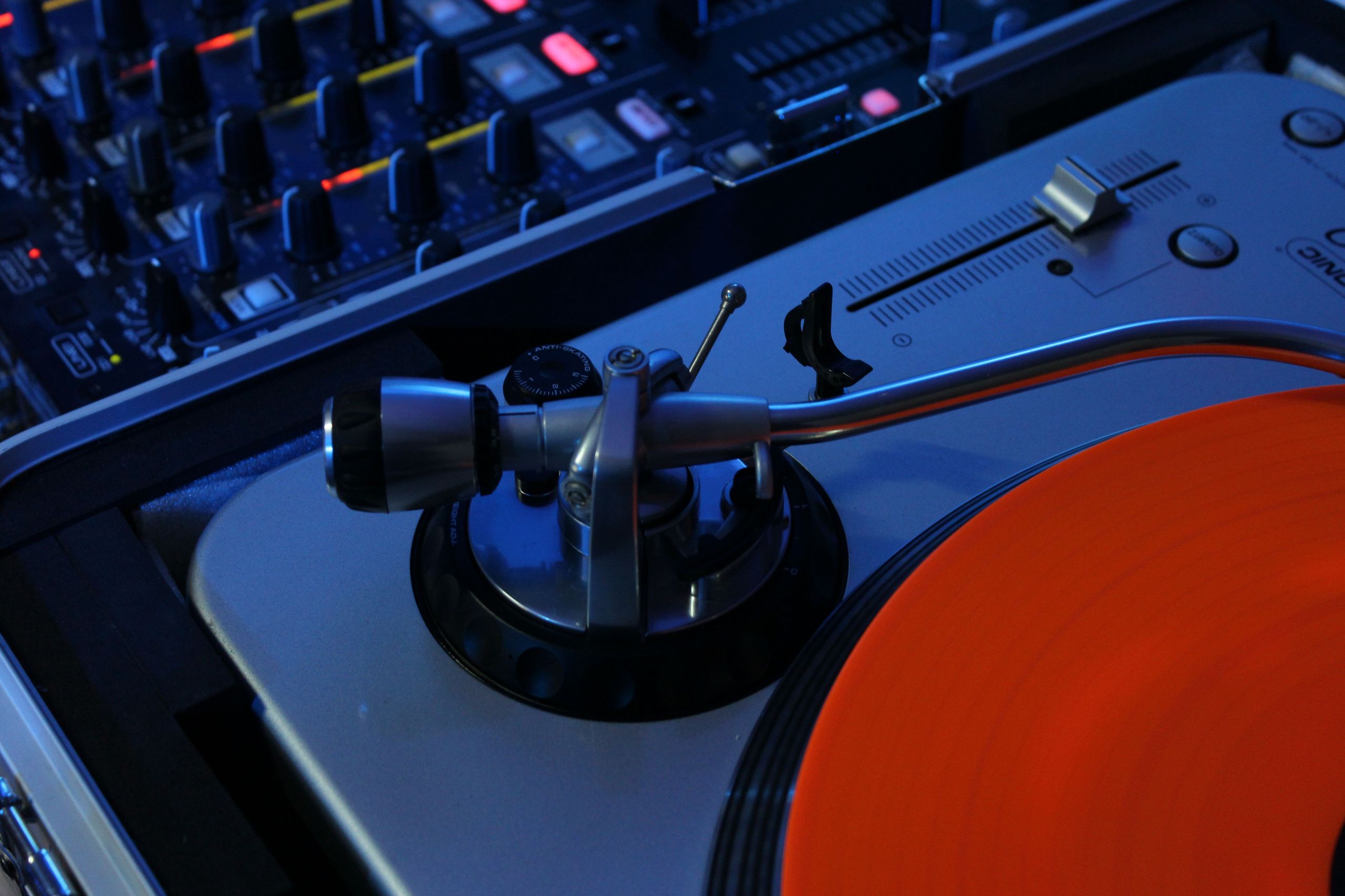
Early hip-hop DJ's used vinyl records and turntables to isolate breaks, extend grooves, and create new performance experiences. The turntable became an instrument, not just a playback device.
2. Mixers
Mixers allowed DJ's to blend sound sources, control volume, use crossfaders, and create transitions. The crossfader became a tool for scratching and rhythmic manipulation.
3. Sound Systems and Block Parties
Large speakers, amplifiers, microphones, and outdoor setups made DJing central to public and community culture. Sound systems connected DJing to Jamaican sound system traditions and Bronx block parties.
4. Cassette Tapes and Mixtapes
Mixtapes helped DJ's circulate performances, build reputations, and share music beyond live events. The mixtape became a powerful tool for cultural distribution outside mainstream music industry channels.
5. CDJs and Digital Media
CD-based DJ systems gave performers more portability while preserving many mixing techniques. CDJs expanded access and became industry standard equipment in clubs worldwide.
6. MP3s and Laptops
Digital files changed how DJ's stored, searched, transported, and organized music. Massive digital libraries became possible, but raised new questions about discovery, curating, and preservation.
7. Digital Vinyl Systems
Digital vinyl systems allowed DJ's to control digital music files while keeping the feel of turntables. This technology bridged the analog and digital worlds for traditionalist DJ's and turntablists.
8. Controllers and DJ Software
Controllers and software expanded possibilities for cue points, loops, effects, stems, and live remixing. Software platforms made DJing more accessible to new audiences and creators.
9. Streaming and Cloud Libraries
Streaming increased access but raised questions about licensing, ownership, platform dependence, and preservation. Who controls access to the music archive when it lives on a server?
10. AI-Assisted Music Tools
AI tools can assist with beat detection, stem separation, playlisting, mastering, and music generation. Students should study these critically, especially around authorship, copyright, training data, cultural appropriation, and ownership of AI-generated sound.
🤔 Critical Thinking
When technology makes it easier to manipulate sound, who receives credit: the DJ, the producer, the original musician, the software designer, the platform, or the machine? These questions are active areas of debate in copyright law, music scholarship, and cultural criticism.
AI, Copyright, and Digital Music Resources
U.S. Copyright Office: Copyright and Artificial Intelligence
This source helps students understand emerging copyright issues related to generative AI, authorship, digital replicas, and AI training. Use it for research about AI-assisted music, authorship, and copyright policy.
U.S. Copyright Office NewsNet: AI Copyrightability Report
This report addresses when works involving generative AI may or may not receive copyright protection. It is useful for students studying human authorship, machine-assisted creativity, and the legal boundaries of AI-generated music.
Library of Congress Citizen DJ
Citizen DJ demonstrates how archival sounds can become material for new creative work. It is a strong example of how libraries can support remix culture and digital creativity using public-domain recordings responsibly.